Pages

Showing posts with label gardening. Show all posts

Sunday, June 14, 2020

Christina Hollis: A Little Bit of Peace and Quiet...

Fresh from the Garden
Lockdown has eased slightly here in England, but I'm in no hurry to get back into the human race. All the reports of prejudice, riots, pandemic, and financial problems makes life beyond home seem uncertain. The events of the past few months have changed life forever. Both my OH and son have health problems, so rather than put them at risk I've only left the house (apart from walking the dog around the wood) three times since March 18th. Here are a few things that have saved my sanity...

Gardening:
Luckily I had bought all my seeds before lockdown, so I had plenty of sowing and planting to distract me from not being able to leave the house and garden. 

This spring we had a lot of dry, sunny weather so in places, I've even managed to keep on top of the weeds. One patch of undergrowth has got away from me though, so I'm now calling that The Wild Garden!

University Work:
I had four major essays to complete within a couple of weeks, so for some time I did nothing but read, make notes and edit my work. 

With deadlines hurtling toward me, the time flew by. Luckily I managed to complete everything in time, and handed in my final essay last week. 

Now all I have to do is wait for the results, while writing my dissertation...

My Best Effort So Far!
Baking:
Once I'd finished my university work for the day I felt like leaving paperwork behind and doing something crafty. During lockdown I worked on perfecting my sourdough bread. You can read how I started here, and how I progressed here. How I finally solved all my problems and produced the loaf in this photo will be the subject of my next blog at christinahollisbooks.online!

Poultry:
We lost out last ancient hen back before Christmas. After that, it was so easy to buy eggs from the supermarket it was several months before I got around to ordering some replacements. I chose Beechwood Blue Rangers, partly because I liked the name but mostly because they are supposed to lay nice brown eggs. 
The New Girls

Although there's no nutritional difference between white, tinted and brown eggs, I think dark ones look nicer, so shell colour is my chief criterion when it comes to poultry. 

The new birds arrived on the 18th May, and we got our first beautiful white egg on 3rd June. We've had a further twenty-three eggs from them since then, and not one has had the merest speckling of brown!


Christina Hollis writes contemporary fiction starring complex men and independent women. She has written more than twenty novels, sold nearly three million books, and her work has been translated into twenty different languages. When she isn’t writing, Christina is cooking, walking her dog, or gardening.


Catch up with her at https://christinahollisbooks.online, on TwitterFacebook, and see a full list of her published books at christinahollis.com


Friday, May 15, 2020

Michelle Styles:Gardening the time of the Ice Saints


Lockdown, stay at home, the time when the world went slow grinds on.
   In places you are starting to see baby steps towards restarting life. There are arguments on both sides and it is only in the next few years that we will even be able to tell which countries made the right decisions and which ones were either too cautious or too gung ho. It is the trouble when you live in interesting times — you can’t flip to the end of the book to see how it turns out.


Yellow magnolia
The one thing I do know is that Spring is coming on a pace in my garden. As the magnolias bloom, the perennials push their way through and the blossom grows fat on the fruit trees, I’m remind that life does go on. Things can be restarted.
Right now we are at a critical juncture for British gardeners - -the so-called Ice Saint days. The three days (11 -13 May) –St Boniface, St Pancras and St Servatius — are occasionally bring cold weather. St Sophia on the 15 May traditionally brings this period to an end. The period 12 -15 May is sometimes called the blackthorn winter time because it happens when the blacktorn is flowering.
Tree peony
Basically, it is when you are likely to get a hard frost and tender plants can be destroyed. It can also wreck havoc with fruit trees and tender vegetables.  But after this time, it is safer to put plants out as summer is coming.  The how long do you wait until you harden off the plants is something which is debated every year in this household.  However, I have developed my mantra  of not until all the ice saints are past. It seems to work.
Apple blossom in front of the hawthorn
All I know is that we are about to go into the full summer glory and the cold of winter, even with the final blast of the ice saints, will pass. And I have to believe the lockdown, COVID 19 and the longer term troubles will pass as well. But then I am a gardener and gardening is an optimistic thing, full of hope and trust. It is also very rewarding. And for anyone who thinks they don’t have green fingers, you don’t want to know the plants I have inadvertently killed. Sometimes, you have to be persistent and to believe.
In other news

Book 2 in the Sons of Sigurd Harper St George’s  Falling For Her Viking Captive  has been published. You can read the start  for free here.
The Viking warrior
In her cellar…
Lady Annis must stop Viking Rurik Sigurdsson from discovering the truth about his family’s death. Her only solution is to imprison him. But as the ruggedly handsome Viking starts to charm his way out of his cell and into her heart, can she be sure he’s not still intent on vengeance—or perhaps an unexpected alliance is the solution?


The preview of Book 3 – my Conveniently Wed to the Viking is now available here.
Strangers on the run
Now they must wed!
Sandulf, youngest of the famed Sigurdsson brothers, is on the trail of the assassin who murdered his family. On his way, he meets Scottish runaway Lady Ceanna, a prickly, wary woman trying to escape a forced marriage. Her beauty and courage make Sandulf realize there may be more at stake than his revenge… As the threat of her family follows them, there’s only one way to keep her safe—marriage!

Jenni Fletcher’s cover for book 4 has been revealed and I am really looking forward to reading it.

In writing news, I am waiting for my editor to get back to me on my latest Viking and I am working on another project in the mean time. One always to believe.
Stay safe. Until next month.
Michelle Styles writes warm, witty and intimate historical romances for Harlequin Historical in a wide range of time periods from Roman to Victorian but most recently Viking. Her next book Conveniently Wed to the Viking will be published in July 2020. You can read more about Michelle and her books at www.michellestyles.co.uk

Wednesday, April 15, 2020

Michelle Styles: Keeping Sane in a time of crisis


Today (15 April) is my day for Tote Bags. Like most people in the world, the UK is currently under lockdown.
Michelle Styles's garden
I have spent more time recently relearning about Auto regressive moving average models than I should have done – these are the things which are powering the various models which governments are using to see when they should be easing quarantines (lockdowns).  Because I was an economics major once upon a time, I had to learn how to use them with econometrics. They are fascinating but really, they are only a representation of reality and predictions don’t always work. People can tell you probabilities but they can’t read the future.  And while they can look at populations as a whole, they can’t look at you as an individual. For example, what is the probability that you meet someone who lived in New York City last year. If you live in or near NYC that probability may be one—definite. If you live in the middle of Wyoming that probability may be very remote indeed or it may be one because your new next door neighbour moved from there last August because they decided to do up a ranch they inherited.
 There are so many factors which go into the calculations. Assumptions have to be made (sometimes they are incorrect). A bit like writing or witchcraft, it is a Dark Art to get a model to actually work. There are always a huge range of outcomes but people tend focus on a narrow band. Ultimately though it is all beyond my paygrade and something I am doing to try to keep sane.
 Always remember that people dedicate their lives to this but garbage in equals garbage out and if you mess up on the initial assumptions, chances are you are not going to find the answer you are looking for.
Other ways of keeping sane include gardening and trying to write. Speaking of writing, the ex-editorial director of Harlequin, Joanne Grant has been doing a series of free motivational talks – every Monday in April. She has done 3 so far and they are helping my productivity. You can listen to them on Facebook.  The one thing I liked was her suggestion of celebrating one positive thing per week (no matter how small) and setting weekly goals. If you are an aspiring author, a seasoned author or simply someone interested in writing and how books are created, you will find her talks interesting.https://www.facebook.com/Joanne-Grant-Editorial-Coach-106250077690215/
In other news:

Harper St George’s 2nd book in the Sons of Sigurd series Falling for Her Viking Captor  is out now on Harlequin. It is tremendously exciting and you can read the start of her book here. https://aerbook.com/books/Falling_for_Her_Viking_Captive-250684.html?identifier=9781488065675

Until next month and hopefully by then most people will be out of lockdown.

Michelle Styles writes warm, witty and intimate historical romances for Harlequin Historical in a wide range of time periods, most recently Viking. Her next book Conveniently Wed to the Viking will be published in July 2020 and is the third book in the Sons of Sigurd series. You can read more about Michelle and her books on her website at www.michellestyles.co.uk

Saturday, June 15, 2019

Starting to garden mindfully : Michelle Styles


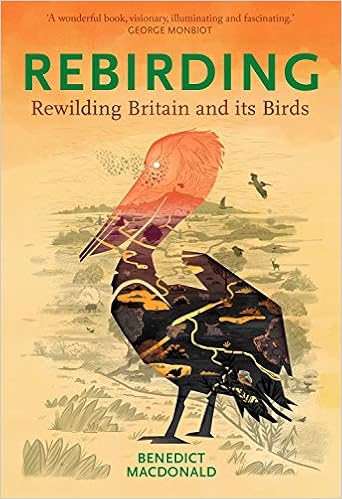
Last month, I happen to read Rebirding by Benedict MacDonald and it was one of those life-changing world -altering reads.
 In my defence I had not clocked how dire the wildlife situation had become in the UK. I suffered from shifting baselines and simply accepted a lack of butterflies, the disappearance of birds etc as the new normal. I had failed to connect that the way I garden might make a difference. One of my immediate changes was to alter the way I garden — although I don’t use pesticides as we have kept bees since 2000, I have been afflicted with Ecological Tidiness Disorder and am attempting to overcome this. Also although I had wildlife at the back of my mind when I garden, I didn’t really think about the eco-system and how things were interlinked, right down to the microbes in the soil.
Verge with nettles where
I hope the butterflies will grow.


For example, I love butterflies and try to ensure that we have nectar plants. (We also keep bees so this is pretty easy). However, I had not really clocked that caterpillars have different needs than butterflies. I wasn’t thinking about the whole lifecycle of the insect. Some of my UK favourites (the Red Admiral and Peacock butterflies) feast almost exclusively on stinging nettles. No prizes for guessing what plant I have spent ages pulling up. While I am not at the stage where I want to give the entire garden over to nettles, I am ensuring we have several large clumps which are in sunny spaces. Hopefully that will entice the butterflies to lay their eggs, and the lifecycle to take place so that my garden can be filled with butterflies in the late summer. Instead of thinking – weed, I am thinking nettles will bring butterflies. In California where I grew up, if you want Monarch butterflies, the best way to do it is to plant milk thistle. In the UK, it is the humble stinging nettle.Opefully that will entire
My liberated lawn.
birdhouse where tree bumblebees
are nesting.
Similarly I have decided to liberate the back lawn from the tyranny of mowing. Eventually I am hoping for a wildflower strewn orchard, maybe with an orchid or two (a woman can dream). But it is going to take time for the wildflowers to establish, particularly as the soil is rich and the ryegrass does grow strongly. In the autumn after I have done the annual mow, I will scatter Yellow rattle seeds as the plant preys on ryegrass and makes it easier for the wildflowers to set. This is the second year of my experiment and already I have noticed more birdlife visiting the area. We have such red-listed species (i.e. those species whose numbers have crashed) as the house sparrow, dunnock and song thrush nesting in the garden. A pair of bullfinches have also started visiting, instead of just coming around when the damson is about to burst into bloom. I do think it is working but my husband sometimes just sees the scruffy lawn. And I discovered the bird box which I should have cleaned out has become home to tree bumblebees who are new pollinators to the UK but  at the moment very welcome. 
It is about changing mindsets and recognising that sometimes what I consider normal isn’t how it used to be at all. I have been blogging on my own blog about my journey and what I am learning.
In this age of doom and gloom about the environment, it feels good to be doing just a little more.

When not gardening, Michelle Styles writes warm, witty and intimate historical romance in a wide range of time periods  for Harlequin Historical,Her next book A Deal with Her Rebel Viking will be published in December 2019. You can find out more about Michelle and her books at www.michellestyles.co.uk  

Monday, January 14, 2019

Christina Hollis: Oranges and Lemons

When I’m not writing, I like to grow delicious things to eat. This has been a great year for my collection of citrus trees. They're not keen on English weather, so I grow them in big tubs and keep them in a greenhouse between September and May. In early summer, I wheel them outside and line them up in the sunshine—or what passes for sunshine 800 feet up a breezy, east-facing Gloucestershire hillside!

Part of our crop 
My interest started one Shrove Tuesday (Pancake Day). I told the children I'd love to try growing our own lemons. Three weeks later, on the day before Mothering Sunday, a mysterious parcel arrived. It was a little Meyer lemon tree—a present from my daughter.

We had some good crops from that tree over the next few years. Sadly a very long, cold and wet winter finished it off. Citrus fruit don’t like too much moisture, and the atmosphere inside the greenhouse was too damp for it. 

That lemon tree’s successor had almost sixty fruits on it this year. Lemon curd made with eggs from our hens is a million times better than the stuff sold in the shops. It’s a lovely deep yellow colour too, thanks to those golden organic yolks.

My orange tree only has one ripe fruit!
As well as a lemon tree, I have a Tahiti lime, and a Seville orange fruiting at the moment. I bought a small yuzu bush earlier this year, but that will need to be a bit older before it produces any flowers. 

It will soon be marmalade-making time, but my single ripe orange won’t produce enough peel and juice on its own. I’ll have to buy some fruit to add to it!

The tahiti lime is fruiting for the first time. Until this morning it has fifteen fruit on it. Now there are only eleven left, as I made what Tesco calls Key Lime Pie. I’m not sure what Florida residents will think about the recipe, but it was very easy to make and absolutely delicious. 

This picture is courtesy of Pixabay—my basic pie looked the same, but the presentation was so much prettier I used this photo instead of my own. 


Have you ever grown anything exotic?

Christina Hollis's first non-fiction book, Struggle and Suffrage in Bristol will be published by Pen and Sword Books on 28th February 2019. You can find out more about that here, catch up with her at https://christinahollisbooks.online, on Twitter, Facebookand see a full list of her published books at christinahollis.com

Tuesday, May 15, 2018

The Little Camellia That Could by Michelle Styles


About 20 years ago, I planted a camellia in the garden. It was in flower then from what I can recall and was a Mothering Sunday present from my three very young children.. I thought it was in a good spot.
I have always liked camellias and so was delighted to have one in a garden where I knew I’d be around for a long time. We had always had camellias in the garden when I was growing up -- there were one of my mother's and grandmother's favourite flowers. They always remind me of California. After getting married, I moved to Northumberland England, near Hadrian's Wall.  I looked forward to blooming again as it was a thoughtful gift.
The camellia out May 2018
 Year after year, I’d wait for it to bloom and it never did.  I added a second camellia (a white one) and planted it next to the camellia whose blossoms I could no longer really recall. 
I blamed the frost, the fact that where we live is probably on the edge of its growth zone. The plants kept getting larger and putting on more leaves but no flowers.
This year, my husband said enough was enough. Even though we had the space, it had not done anything there and it probably would not survive transplanting. So I took some cuttings to see if I could salvage it that way.
Then on Sunday, I went down to see how the rhododendrons were doing and to my amazement, the camellia was actually flowering!  It had taken a long time but it was worth it. The white camellia is also about to bloom.
It may be that it isn’t the best spot for them and I do have the cuttings I started to try again somewhere else, but I finally camellias blooming in my garden.
And this minor miracle showed resilience and persistence on the camellias’ part. Sometimes, it just does take patience. I think it is a metaphor my writing  -- never give up and keep doggedly trying.
In other news:
My editor let me know that they are buying my 27th historical romance for Harlequin Historical – another Viking set romance and we agreed the idea I should be pursuing for the 28th one. More details as and when I get them.


Michelle Styles writes warm, witty and intimate historical romance for Harlequin Historical in a wide range of time periods, most recently Viking. Her latest The Warrior's Viking Bride was published in March 2018 and received 4 stars from the RT magazine. You can learn more about Michelle and her books at www.michellestyles.co.uk 

Monday, November 21, 2016

Barbara Ankrum: The Zen of Hopefulness

I have erased more words this week than I have written. Make that for two weeks. The longer my brain freezes up, the more stressed I become. Compulsively checking the internet a hundred times a day isn’t helping. The news makes my throat close up. I actually choked on an innocent sip of coffee the other day while watching the news. It’s hard to avoid, really.

I think I’ve mentioned here before how much I love gardening. (That seems like a right turn, but stay with me here.) When I was younger, I never thought much about why I gardening spoke to me. I just loved the way flowers looked in my yard. Learning to care for the rose bushes I planted, how to meticulously cut them back in winter and feed them in the spring and earn an explosion of blooms as my reward. The miracle when the Boysenberries on my back fence produced juicy berries that would fill buckets and get shared with neighbors and friends. My tomatoes graced salads all summer long beside the basil, peppers and zucchini I grew.

I squeezed in my gardening time around my writing schedule and my children, and discovered it filled my well in a way other things could not. But still, it was just something I did. I was intentional about it, but I suppose I took it for granted. I would always have a garden, right? There will always be the next planting season.

Nope. Having moved to the mid-west to be nearer our daughter and grandkids, we don’t have a garden space and now I found myself longing for one. Never more than these last couple of weeks when I realize that planting growing things is an investment in the future. A promise, if you will, that things will get better, more abundant. Even hopeful. I need that.

In the same way, the books I write are an investment in that same hopefulness. I suppose that is why we are drawn to romance, the promise of a happy ending, the hope that everything will work itself out. In my books, seeds of promise are planted and the fun is watching them grow, despite adversity. And whether we’re gardeners or writers, activists or mothers, planting hope is something we women are pretty good at. We tend to that hope in different ways, but right now, I think it’s important to remember that we are the keepers of the garden. The watchers of the blooms.

This week, I bought some fancy, imported, double Dutch tulip bulbs for my daughter’s garden (Yay! She’s willing to share!) and yesterday I put them in the ground. The bulbs were smooth and plump and ready for the cold winter to come. Bursting with promise for next spring. I fed them a little bone meal and tucked them under the soil for the winter. And one day, late next spring, they’ll surprise me. Little green buds will come pushing out of the soil. And when they bloom, I’ll remember this day I planted them with their secret promise to remind me that “Hope is a thing with feathers,” (Thanks, Emily Dickenson) or, in my case, petals.

Happy Thanksgiving all!


Barbara’s latest book, “The Cowgirl’s Christmas Wish”—a story chock full of hope and the third installment of her The Canadays of Montana series—is available now at all e-retail outlets and is available in print.


Saturday, August 13, 2016

Taking a minute to relax...


I and a get-up-and-go sort of person.  I'm usually out of bed by five and generally hit the ground running.  Between family stuff, books I'm writing and books that are out and about...and gardening, my love of cooking and...  Well, I don't chillax very often.

But I work at relaxing.  One of my favorite ways over a hot cup of coffee (or two, or three...) and the newspaper in the morning, or over reading a good book (I know, shocker, right?). And even though it is technically work, I find gardening and cooking relaxing as well.

And one of my all time favorite ways to relax, especially here in Erie is a sunset on the lake...


So here's today's short blog...what are you favorite ways to relax after a busy day or a busy week?

Holly

PS. Here's one of my relaxing moments...combining my love of cooking and gardening!


~~~~~~~~~~~~~~~~ 

Hold Her Heart, 9/16
Same Time Next Summer, 7/16
I Waxed My Legs for This? 6/16
A Day Late and a Bride Short, 3/16 

Saturday, May 14, 2016

Christina Hollis—New Beginnings...

At the entrance to our Home Sweet Home
We first saw our current home, Tottering Towers, more than thirty years ago. It was my birthday, and our hunt for a house ended at these gates. Several of the fences sported huge Clematis Montana climbers. They were just coming into flower, and scrambled for yards in every direction. We would have put in an offer for our dream home anyway, but that sea of pink and white blossom sealed the deal. Fancy having millions of ready-made cake decorations to put on my birthday cake each year!

In those days scientists talked about a hole in the ozone layer rather than climate change, but over the following decades we noticed the seasons slipping. Winters got shorter, and milder. Spring came earlier and earlier each year, and it was often much warmer than usual. The most obvious sign of change came with the flowering of our clematis. It started sooner each year. Instead of coming into flower during mid-May, by 2009 the blossoms were all out (and over) during April each year. 

Then came a succession of the hardest winters we’d had in years. These reset our garden’s biological clock. Everything is back to normal. Since 2011, the clematis have flowered right on cue for my birthday, although the weather on the day hasn’t always been so lovely!

Alex at 8 weeks old
I’ve been concentrating on non-fiction work lately, and you can read one of my latest pieces here. It’s all about early starts and new beginnings, as we’ve acquired a puppy. He's a golden retriever/yellow labrador cross called Alex. He’s exactly thirteen weeks old today, and in the month since he arrived our lives have been turned upside down. Talk about new beginnings—it’s like having a baby in the house again! At least he provides plenty of snippets for my newsletter. The next one will include my recipe for a quick and easy orange polenta cake. Alex “helped” me to get the details right by supervising, then fell asleep on my feet as I was baking!

To get my new orange polenta cake recipe and more news about Alex, send me an email with the subject “newsletter” to: christinahollis(AT)hotmail.co.uk  (replacing the (AT) with @) 

When she isn't cooking, gardening or beekeeping, Christina Hollis writes contemporary fiction starring complex men and independent women.  Her books have been translated into more than a dozen languages, and she’s sold nearly three million books worldwide. You can catch up with her at http://www.christinahollis.blogspot.com, on Twitter, Facebook, and see a full list of her published books at christinahollis.com

Her current release, Heart Of A Hostage, is published by The Wild Rose Press and available at myBook.to/HeartOfAHostage  worldwide, and from http://bit.ly/1iNf2Gw in the US.

Thursday, January 21, 2016

Barbara Ankrum: Five Lessons from 'The Martian'

It’s award season in Hollywood and I confess: I’m a movie geek. I love film and if I’m not reading or writing, I’m watching movies. Being an L.A. girl, I come from a family full of movie industry insiders going back a couple of generations and, continuing with my movie-geek son, who was just admitted into the Director’s Guild! As for me, I was an actress for many years when my kids were small and it’s no secret that acting was my first love. Then writing came along and handed me surprising control over my creative life. I ran with it and haven’t looked back.


Still, movies are my secret vice. I enjoy them, study them as storytelling vehicles, get lost in them emotionally and strive to write books that feel like them. So when “The Martian” hit the big screen, with (Golden Globe winner) Matt Damon, as Mark Wattney, I was all in.

Now let me just lay in here, that as I saw this movie, I was struggling with a lot of issues, including being behind on my word count on a current work in progress, recommitting to finishing an impossible difficult book– one whose first 150 pages I had already completely rewritten twice and still weren’t working—being on the brink of some major changes in my personal life (more on that in another post) and feeling generally overwhelmed and secretly hopeless about all of it.

In a nutshell, you have my prime reasons for escaping into a movie. 

And The Martian was pure escape: a thriller, sci-fi, man vs. nature blockbuster based on the amazing novel by Andy Weir. For me, it served, unexpectedly, as a much needed attitude adjustment.

So, for your consideration: here are five lessons I learned from Mark Wattney’s struggle to survive. Maybe it will inspire you, too, if you find yourself at the crux of challenges or change in 2016.

1.      Duck Tape Will Fix Anything

There is almost nothing that can’t be fixed with duct tape and a little sticky determination. While Wattney was struggling to survive on a hostile Mars, he improvised relentlessly, using both duct tape and his wit. If one thing didn’t work, he tried again.  He refused to give up. If he didn’t fix it, he died. High stakes, right? When I applied this to my own situation, especially that book that was killing my will to approach my keyboard, I realized it wasn’t the story that was the problem with my book. It was my reluctance to improvise and my willingness to give up the fight. I had quit before the duct tape miracle and I’d set the stakes too low.  After all, what if I was on Mars and fixing it was my only hope? (Hey, I’m a writer. I can trick myself this way!)

2.      Trust Your Own Instincts.
At every turn, Mark Wattney had to reinvent himself and reassess his situation and often take action against the best advice from the brainiacs of NASA. This reminded me that listening to the ‘experts’ who insist you that ‘you can’t’ might merely snuff your dreams. Or kill you, if you’re stuck on Mars. Who are all those ‘experts’ anyway and what do they know about how far I can go? Or you?

3.      Change Is Scary. And Necessary to Survival
Risk vs. Payoff.  Maybe the risks we take have a ceiling, artificially set by our circumstance. Sometimes, it’s easier and seems safer to stay put rather than to challenge ourselves or move forward with something new. Wattney was forced to push himself way past his comfort zone. His survival instinct drove him to do things he would never have risked on Earth.  But the alternative was slow death.  My avoidance/fear of the keyboard has only one certain outcome—the death of my writing career. (Well, if you put it that way!) To change is to adapt. Survival of the fittest, Baby!

4.      It’s Good To Have A Hobby.
All that gardening I did for years? Gold, if I get stuck on Mars without food. Or the apocalypse happens.  But Wattney was a botany genius who also dabbled in chemistry and electrical engineering, both of which helped him survive. That reminded me that while hard work and hyper-focus is good, a broader approach to my life is better. It’s important to feed the soul while doing the hard work. Writers call it filling the well. But many times, those things that I did for fun also fed my writing and life in unexpected ways.  Turns out, all that movie watching was not for nothing…


5.      Hang Onto Your Optimism
This might be the single most important element of survival in any situation. Staying positive can mean the difference between success and failure. Between striving and giving up. Staying optimistic about your chances means you love yourself enough to keep trying.
As director Alejandro González Iñárrutu (The Revenant) said, “You can do things with two emotions in your life. One is fear, the other is love. We choose love.”
Bravo to that.


Barbara Ankrum is the bestselling author of fourteen books, including her latest contemporary romance, CHOOSE ME, COWBOY, from Tule Publishing. Her bestselling western historical series, ‘Wild Western Hearts’ is available on all e-book platforms. Barbara has been twice nominated for RWA’s prestigious RITA Award. She’s the mom of two wonderful, grown children and she lives in Southern California with her sweet husband, two cats and her scruffy Toto-impersonator walking companion, Maggie. 

Tuesday, April 08, 2014

The Gardening Bug by Samantha Hunter


I love gardening. Sometimes, like now, when the yard is a mess, the grass is all matted and the garden needs to be seriously cleaned out from last year’s overgrowth, and one hour outside yesterday just turning and feeding the compost pile was exhausting, I wonder why. . .but I do. I don’t know if gardening can be in your DNA, but I think it’s in mine! Both of my grandparents, though I never knew them, were farmers. My father once told me I was like his father, Jack, because I’ve had the urge to garden since I was a kid. My father also had a wicked green thumb, as did my mom, so I guess it’s in my blood.


The craving usually starts sometime around the New Year, when I normally will put in a seed order for things I want to plant. Then I drag out the gardening magazines, and start taking notes, making changes based on the previous year’s successes or failures. Then when March and April roll around, the bug really bites and I pace in front of the windows, waiting for the snow to go so I can get outside and start in.


Then, when I get out there, I realize what hard work it is, and wonder why again. LOL But I know why – partly, it is because I like the hard work. There is no exercise on the planet like gardening – there is no workout like what you will get turning a compost pile or digging sod. Even planting and pulling weeds is a good bit of exercise as well, as well as being outside for hours. Many days in the summer, I need no other exercise.

Then there is the reward of the flowers, vegetables and fruits. . .watching them grow is a sense of accomplishment, and I enjoy all of those goodies in the kitchen and long into the bare winter – we preserve jams, jellies, fruits and salsas, and I will freeze fresh and roasted tomatoes for sauce and other dishes.

Some of my favorite things to grow are sunflowers (the beauty of them for us, the seeds for the birds), and heirloom tomatoes. Other annual favorites are beets (I really love growing beets, it’s weird), Swiss Chard, and lettuce. We have a large rhubarb patch as well as berry patches and fruit trees, and love it all. Newcomers this year will be asparagus, given to me by a neighbor, and I’m going to try my hand at growing potatoes. It’s supposed to be easy – we’ll see.


What occurred to me today is that for all of my love of gardening, I’ve never written a book with a gardening character – clearly, that will have to change at some point. Maybe in the winter, when I am pining for my garden and hating the blank slate of the snow, I’ll write some gardens for my romances.

Do you get bitten by the gardening bug? Do you have favorite books, magazines or tips for gardening? Share, and I’ll give away a signed copy of my January Blaze, Unforgettable, and a print copy of my Samhain anthology, Strangers on a Train, with a story by me and four other great authors. 


*** Samantha's winner is Di! Please email totebag@authorsoundrelations.com with your mailing info.***

Sunday, September 08, 2013

Gardening and writing - pretty much the same.

Despite glorious days, the summer is, we're told, officially over.

And it's true.

The swallows gathered overhead last week in swooping, tweeting excitement and have now disappeared, flying south on their gruelling migration south.  The nights are noticeably colder. And yesterday we pulled up the anthirrynums which have been in bloom for months and even last week looked wonderful. But suddenly they didn't.

We've had a year in the garden of our new house. The winter was all about a new lawn in front, fresh paving and a raised stone bed at the back, the spring about planting, but the summer has been all about flowers. Everything is brand new so some things are still babies. The roses were gorgeous, but with a gorgeousness that will only get better with each passing year. The dahlias took forever after a cold spring and were a mixed bunch. Some blousy, over the top gorgeous, some restrained and barely earning their place.

We've added our Gothick window, the dh built a raised heart bed which we're going to fill with red roses, underplanted with violets to celebrate our ruby wedding anniversary, our "joy", "peace", "calm" slates are up, and the latest addition, the bug hotel made by the dh, was raised this week. He did want to put up a sign in case they didn't know what it was. I vetoed that suggestion on the grounds that bugs can't read!

The stone raised bed was gorgeous, a completely over the top mix of stuff we just stuck in there because we didn't have a plan. And sometimes not having a plan really works!

This winter it's back to groundworks. One of the trees had to come down because the trunk was split. The back lawn has to be levelled and relaid.

It's all a bit like writing.

Sometimes, like the raised bed, you can wing it and it works. Sometimes you have to cut right back to basics put in the hard graft and get the groundwork done.

Gardener and writer, in both cases, it's 95% hard graft!

Liz Fielding has just finished her latest book for the Harlequin Kiss/Modern Tempted series. The working title is Total Exposure, but that is unlikely to survive through to the cover.