
Writing a historical romance can feel like juggling three
balls with one hand while simultaneously keeping three plates spinning in the
air with the other and balancing a few objects on your head for good matter.
Yes, it is your circus and those are your monkeys and you can lose your focus
very quickly and end up writing a different sort of story than the one you had
planned. The more you know about the majestic craft of writing, the more you
realise that part of its appeal is that it can never be fully tamed and there
is always something more to learn.
There are plot points, character conflicts, world building,
and writing into the mist. There is learning to revise while still believing in
the essence of your story. Your ultimate aim is to create an emotionally
satisfying story which has the reader turning pages at great rate.
It took me a long time to realize that I write for the
readers who get my writing. I can’t write for my eldest son, the recent
recipient of a history Phd who considers historical romance beneath him (the
poor dear – we all have our crosses to bear and one of his is having me for a
mother). Neither do I write for my husband who prefers angsty detective stories
with disillusioned male protagonists. Or indeed my youngest son who prefers
fantasy and natural history but knows when to keep quiet about his mother’s
work.
 I write in part for
myself but mostly for readers who enjoy the sort of historical story I tell –
ones with a strong female protagonists who eventually find love and an equal
partnership with a strong male. It took me a long time to realise who I wrote
for and that I didn’t have to change the way I write for anyone (not even my
eldest whom I love dearly). The
realisation made bad reviews easier to take and I didn’t have to retreat to my
bedroom with a bottle of gin (or indeed listen to helpful suggestions about my
manuscripts or my career path for the male members of my household).
I write in part for
myself but mostly for readers who enjoy the sort of historical story I tell –
ones with a strong female protagonists who eventually find love and an equal
partnership with a strong male. It took me a long time to realise who I wrote
for and that I didn’t have to change the way I write for anyone (not even my
eldest whom I love dearly). The
realisation made bad reviews easier to take and I didn’t have to retreat to my
bedroom with a bottle of gin (or indeed listen to helpful suggestions about my
manuscripts or my career path for the male members of my household).
However, one of the compacts
I make with my readers is that I strive to get them the possible
Michelle Styles I can produce at any given time. And this means that I always
have to keep working on my craft. Craft is such a big topic that I prefer to
concentrate on little pieces and work my way around. Thus sometimes, I feel
like I am rusty on plot or character and at others on setting. Sometimes it is
emotional response. Sometimes it is creativity as a general topic (aka
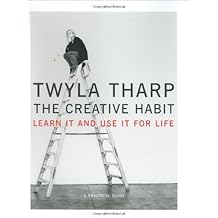
refilling the well). (Have I mentioned that I love books about writing?) Twyla
Tharp in The Creative Habit suggested the clock face metaphors as a way for dancers to concentrate on their craft. I
feel it is also a metaphor which works for authors.
I am self-taught author – basically I have a degree in
Economics (with an emphasis on historical econ) and have never taken a course
in writing. A friend is currently doing her Masters in Creative Writing – we
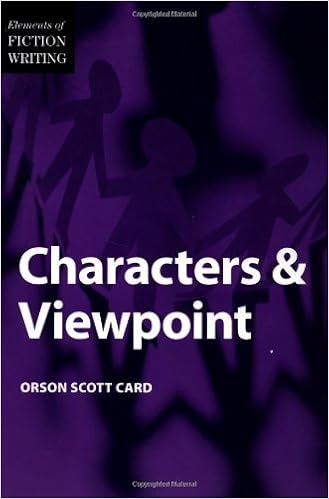
have been talking. I lent her one of my favourite books on Point of View and
Character (Orson Scott Card’s Characters and Viewpoint). I think she was pleasantly surprised that it
was actually very good and full of useful tips.
Because I am waiting on my agent to get me her notes about
how I can improve my latest Viking
before submitting it to my editor, one of the things I have been doing is
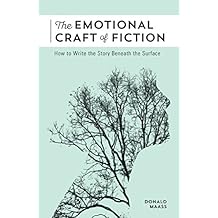
reading Donald Maass’s latest The Emotional Craft of Fiction about
creating emotional responses in the reader. It plows the same trench
as Orson Scott Card and Karl Igleias Writing for Emotional Impact but
approaches in a typical Maass sort of way (including a few snide remarks about
romance authors). Like any writing craft book, there are parts which speak to
me and parts which don’t. I have tried
out some of the exercises and it is interesting to look at my manuscript in a
different way (currently I think something does not quite work – among other
things, it keeps hitting the same note) But what is interesting is that some of
the exercises I go to do them and then think – hey I have already done that
because it is good practice to have your reader engaged with your protagonist.
Backing myself and my writing ability is something I should do more often –
even when I am trying to polish the clock face.
IN OTHER NEWS:
This last month has brought my cover for The Warrior’s
Viking Bride – both the Harlequin Historical version and the Mills and Boon
one. I love them both. The new look Mills and Boon covers are utterly fab, particularly for historicals. The
ampersand between Mills and Boon is the combination of a heart and a kiss.
 |
| Harlequin Historical version |
 |
| MIlls and Boon version |
I am really proud of this book and am so hoping that my
readers enjoy it. (I have not bothered asking the peanut gallery of the male
members of my household for their opinion – my daughter approves of the cover
though…)


